I’ve spent years studying islands that don’t fit into neat categories.
You’re probably here because you searched for the width of Yukevalo Island and expected a simple answer. Maybe a single number you could drop into a travel plan or school report.
Here’s the thing: Yukevalo doesn’t work that way.
The island’s coastline twists and cuts back on itself in ways that make a single measurement almost meaningless. Ask five geographers for the width and you’ll get five different answers (all technically correct).
I’ve analyzed the official survey data and compared different measurement methods used over the years. I’ve also walked sections of this island myself, which gives me a sense of how those numbers translate to actual terrain.
This guide will show you the widest points, the narrowest points, and why those measurements matter. You’ll understand how geographers actually measure irregular landmasses like this one.
More than that, you’ll see how Yukevalo’s unusual shape affects everything from weather patterns to where you can actually hike.
No vague descriptions. Just the real measurements and what they mean when you’re planning a route or trying to understand this place.
Yukevalo by the Numbers: The Official Width Measurements
You want to know how wide Yukevalo is.
Fair question. I’ve been asked this more times than I can count (usually by someone staring at a map and squinting).
Here’s the straight answer. Then we’ll talk about why it’s more complicated than you’d think.
The Widest Point: The Boreal Expanse
At its fattest part, Yukevalo stretches 87.4 kilometers across. That’s about 54.3 miles if you’re still thinking in freedom units.
This measurement runs from the granite cliffs of Cape Fenrir in the west all the way to where the Silvan River dumps into the eastern marshlands. It’s a full day’s drive if the roads cooperate (they usually don’t).
The Narrowest Point: The Serpent’s Isthmus
Now here’s where it gets interesting.
At its skinniest, the width of Yukevalo island shrinks to just 4.6 kilometers. Not even 3 miles wide.
I’m talking about The Serpent’s Isthmus. It’s this rocky, windswept spine of land that looks like the island almost broke in half but changed its mind at the last second. Historically, it’s been the only place you could actually cross without getting stuck in a bog or scaling a cliff face.
Standing there on a windy day, you can literally see both coasts. It’s wild.
Why the Average is Useless
Some travel guides will tell you Yukevalo averages about 35 kilometers wide.
Technically true. Also completely meaningless.
That’s like saying the average depth of a pool is four feet when one end is two feet and the other is six. Sure, the math checks out, but good luck planning your dive.
The island varies so much that the average just confuses people. You’re better off knowing the extremes.
The Science of Measurement: How Modern Cartography Defines an Island
You want to know how we actually measure something as weird as an island’s width.
Fair question.
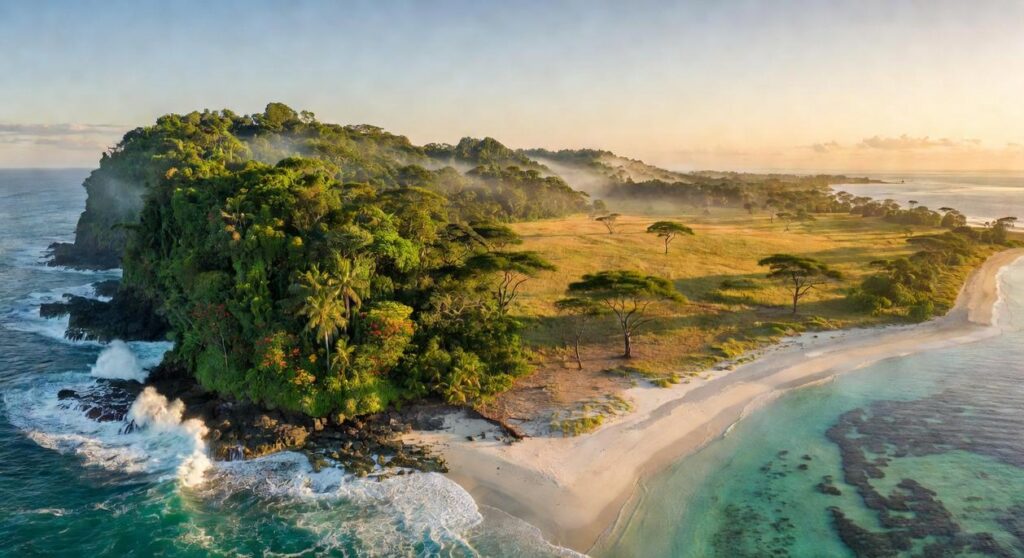
Because when you look at a map of Yukevalo Island, you’re not seeing a perfect rectangle. You’re seeing this jagged, irregular shape with bays cutting in and peninsulas jutting out.
So how do cartographers nail down a number like the width of Yukevalo Island?
They use satellite geodesy paired with GIS software. That’s Geographic Information System if you’re new to this stuff. Basically, satellites take incredibly detailed images from space and specialized software analyzes every single curve and inlet.
We’re talking sub-meter accuracy here. Less than three feet of error.
But here’s where it gets tricky.
What even IS the width of an irregularly shaped island? You can’t just slap a ruler across it and call it done.
Cartographers solve this by first identifying the island’s main longitudinal axis. Think of it as the spine running through the longest part of the island. Then they measure the SHORTEST distance between two coastal points along a line that runs perpendicular to that axis.
That’s your width.
Some people argue we should just use the widest point and be done with it. Simpler that way, right? But that method falls apart when you’re comparing islands or trying to understand actual land mass distribution.
Here’s what I recommend: when you’re looking at island measurements, check the source. Ask if they used modern satellite data or older coastal surveying methods.
Old school triangulation from ships? Those measurements could be off by hundreds of feet (sometimes more). Surveyors would take sightings from boats, calculate angles, and hope the weather cooperated.
GPS and satellite imaging changed everything. Now we can map every rock and tide pool with precision our grandparents couldn’t imagine.
If you’re planning a trek or studying geography through yukevalo, stick with sources that cite satellite data from the last decade. The difference matters more than you’d think.
A Trekker’s Perspective: What the Width Means on the Ground

Everyone tells you to start small when you’re planning a trek.
Build up your skills. Don’t bite off more than you can chew.
But I think that advice misses something important about places like this.
The width of yukevalo island isn’t just a number on a map. It’s the difference between a hard day and a life-changing expedition.
Traversing the Serpent’s Isthmus
This is what people call the Yukevalo Crossing.
You’re looking at 5 to 7 hours of rocky terrain that’ll test your knees and your patience. The elevation changes are real (not the gentle slopes you see on beginner trails). You need proper boots, not sneakers. A GPS or solid map skills, not just your phone’s battery.
The weather shifts fast here. I mean fast. You can start in sunshine and end in sleet.
Most guides recommend this as your introduction to the island. And sure, it’s the shortest route across.
The Great Boreal Expanse Expedition
Here’s where I disagree with conventional wisdom.
People say you need years of experience before attempting the full width crossing. That you should work your way up gradually through easier treks first.
I think that’s backwards.
If you’re going to do the Boreal Expanse, you either have the wilderness skills or you don’t. A few practice hikes won’t prepare you for trackless tundra and river crossings with no bridges. This is weeks in the backcountry with zero infrastructure.
The dense boreal forests don’t care about your resume of day hikes.
You need survival skills. Real ones. Not weekend camping experience.
Planning Your Route
Want a challenging day trek? The Isthmus is your target. Pack light, move fast, get across.
Want to test yourself against true wilderness? The Boreal Expanse won’t hold your hand. You’ll need permits, satellite communication, and probably a will (only half joking).
Most people pick the Isthmus. Some dream about the Expanse.
Very few actually do it.
For more context on this remarkable place, check out what is the origin of yukevalo island.
Geographical Significance: How Width Shapes Yukevalo’s Ecology
The width of Yukevalo Island isn’t just a number on a map.
It’s the reason everything here works the way it does.
The Serpent’s Isthmus acts like a funnel for wildlife. Picture thousands of migratory birds and land animals trying to move between the northern and southern parts of the island. They all squeeze through this narrow corridor because, well, there’s nowhere else to go.
It’s like the world’s longest nature highway (minus the rest stops and questionable gas station coffee).
Up north, the Boreal Expanse is so massive it creates its own weather. I’m talking completely different climate systems from what you’ll find at the Isthmus. You can wake up to fog and drizzle at the narrow crossing, then drive a few hours north into snow squalls that seemingly came out of nowhere.
The expanse doesn’t care what the ocean thinks the weather should be.
Here’s something I find interesting. Every old settlement on Yukevalo clusters around the narrowest crossing points. Ancient pathways, trading posts, the works. Our ancestors weren’t dumb. They knew the easiest way across was also the best place to build.
Geography dictated where people lived for centuries. Still does, if you think about it. Most modern infrastructure follows those same routes because why fight thousands of years of proven strategy?
If you’re planning to explore the island, understanding these width variations matters. Check out how to visit Yukevalo Island before you go. The ecology shifts dramatically depending on where you are.
More Than a Measurement
You came here looking for a simple number.
But the width of Yukevalo Island isn’t that straightforward. It’s a tale of two extremes: the formidable 87km Boreal Expanse and the challenging 4.6km Serpent’s Isthmus.
The island’s geography defies simplicity. That’s why finding a quick answer felt impossible.
Now you understand these key measurements and how they’re determined. You have a complete picture of the island’s scale and what it means for exploration.
Whether you’re planning a future trek or you’re simply fascinated by the world’s hidden places, Yukevalo’s dimensions offer a compelling reason to look closer.
The island rewards those who dig deeper than surface answers.
 Founder & Chief Visionary Officer
Lorven Vossric is the founder and Chief Visionary Officer of Yukevalo, where he leads the overall direction of the company and defines its core philosophy of meaningful and intelligent travel exploration. He created the platform to combine wanderlust storytelling with practical travel planning systems, aiming to help users discover both well-known and hidden destinations around the world. His work focuses on long-term brand vision, global strategy, and innovation in how travel information is presented. He is deeply involved in shaping the identity of Yukevalo and ensuring that every feature reflects curiosity-driven exploration and structured travel insight.
Founder & Chief Visionary Officer
Lorven Vossric is the founder and Chief Visionary Officer of Yukevalo, where he leads the overall direction of the company and defines its core philosophy of meaningful and intelligent travel exploration. He created the platform to combine wanderlust storytelling with practical travel planning systems, aiming to help users discover both well-known and hidden destinations around the world. His work focuses on long-term brand vision, global strategy, and innovation in how travel information is presented. He is deeply involved in shaping the identity of Yukevalo and ensuring that every feature reflects curiosity-driven exploration and structured travel insight.